

A Reading from the Holy Gospel According to Matthew
And again Jesus spoke to them in parables, saying, “The kingdom of heaven may be compared to a king who gave a marriage feast for his son, and sent his servants to call those who were invited to the marriage feast; but they would not come. Again he sent other servants, saying, ‘Tell those who are invited, Behold, I have made ready my dinner, my oxen and my fat calves are killed, and everything is ready; come to the marriage feast.’ But they made light of it and went off, one to his farm, another to his business, while the rest seized his servants, treated them shamefully, and killed them. The king was angry, and he sent his troops and destroyed those murderers and burned their city. Then he said to his servants, ‘The wedding is ready, but those invited were not worthy. Go therefore to the streets, and invite to the marriage feast as many as you find.’ And those servants went out into the streets and gathered all whom they found, both bad and good; so the wedding hall was filled with guests. “But when the king came in to look at the guests, he saw there a man who had no wedding garment; and he said to him, ‘Friend, how did you get in here without a wedding garment?’ And he was speechless. Then the king said to the attendants, ‘Bind him hand and foot, and cast him into the outer darkness, where there will be weeping and gnashing of teeth.’ For many are called, but few are chosen.”
(Matthew 22:1-14)
Fr. Pine’s Sunday Homily for Exodus Men
As you know, on these Sundays, we take a break from our meditation on the letter of St. James to meditate on the Gospel for the day. Today’s parable likens the kingdom of heaven to a man. It says, “The kingdom of heaven may be compared to a king who gave a marriage feast for his son.” In Matthew 13, the first parable says, “The sower went out to sow,” and then there are subsequent parables, such as the one of the weeds and the wheat, the treasure buried in the field, the pearl of great price, the dragnet in the ocean, and two more. In each case, the parable likens the kingdom of heaven to a man or to an individual who is himself the protagonist of the story. The hope here is to recognize that the kingdom of heaven is Our Lord Jesus Christ, with whom we cultivate communion on earth, in the here and now, and with whom we hope to enjoy forever in heaven unto ages of ages. The idea isn’t so much to think about how to observe the rules that get me included in the club. Rather, the idea is, “How do I cultivate the relationship that promises to last forever and ever?” And what we discover is that the kingdom of heaven is doing things. The kingdom of heaven is in hot pursuit.
What we have in this parable is a kind of thumbnail sketch of the story of salvation. We see there are two waves of the offer of salvation. We can think about our first parents, who were created in a state of grace, of original justice; then they sinned, and their descendants were subject to the natural law. With Moses came the giving of the Old Law, then with Christ came the giving of the New Law, and ultimately, all human communion will be consummated in heaven for those who are able to enter therein. In other words, first we had the Edenic state, then our fallen state, then the Old Law, then the New Law, and ultimately heaven. In today’s passage, we see especially the Old Law and the New Law. We hear about the offer of salvation to the Jews, and then to the Gentiles. This theme comes up in the Sacred Scriptures at various points, and St. Paul meditates on it in Romans 9-11. The big question is, “Why did you spend all the time with the Jews if many of them were going to reject you as Messiah?” There’s an extended answer that one might give to that query, but the Jews play their part, and we have been grafted into the people of God, the Church. But that’s maybe for another day.
What we find, though, in the context of the parable, is that God calls all persons of all times and places. His call assumes different forms and shapes. In the Old Law, we find a limited call insofar as it’s sent to the people of God, called to this covenant in Israel. But with the New Law, that message goes out to the very limits of the world. We can think about the other parables in Matthew 13. The sower went out to sow. He’s just spreading seed on the path, among the rocks, among the weeds, and obviously on good soil. But the call is such that they can make whatever soil in which said seed falls to be good soil. It has a transformative power. All these people are capable of hearing and responding. But if they are to do so, it will require them to undergo a kind of transformation.
We talk here about the call of God being such that while he created us without us, he’s not going to save us without us. We need to consent to and cooperate with this offer of salvation. We picture this particular unprepared wedding guest, who might have thought to himself, “Wow, this is an awesome thing.” We can think maybe he felt ever so slightly intimidated or embarrassed at the fact that he wasn’t a noble fellow fit for a noble occasion, and so he just came as he is. But the fact of the matter is that he ought not to have psyched himself out because God provided him with the means that he needed to enter into the wedding feast as befits a guest of said wedding feast. The idea here is that we’re going to have to do something, to offer something. At the very least, we’re going to have to say, “This may as well happen.”
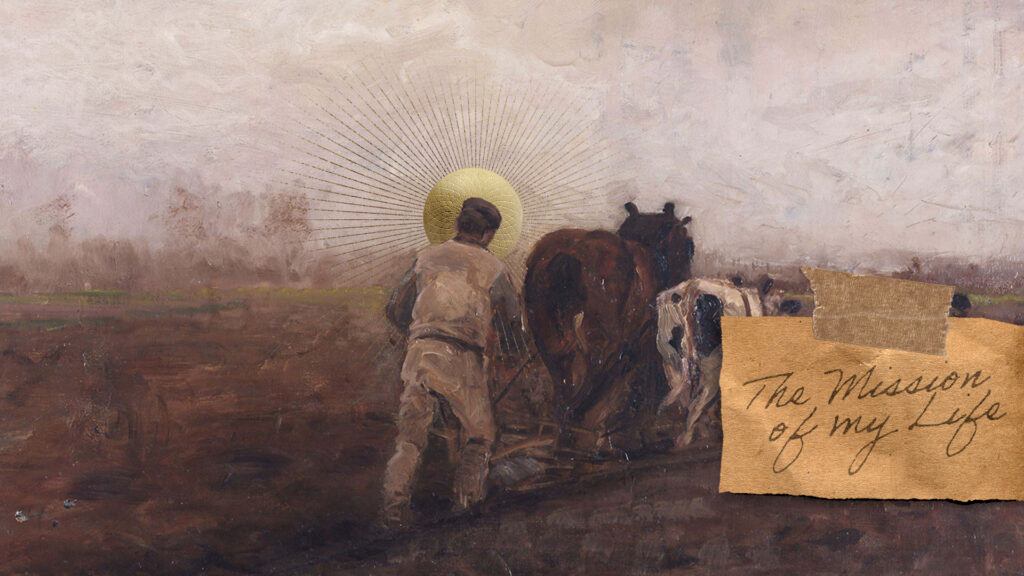
We as Christian men are responsible for not posing obstacles to God’s work in our life, to God’s attempt at drawing us deeper and deeper into divine life. When St. Thomas Aquinas describes this, he says the offer of salvation is like the rays of the sun. It’s always streaming forth. It’s always emanating, as it were, from God. So the offer is on. It’s not a matter of God switching the offer on. But we are responsible for welcoming that offer, for consenting to and cooperating with that offer.
The image he uses is that we can’t close the shutters of our house to block out the sun, or let the window panes get gunked up with accumulated dirt and grime. We’re responsible for leaving open those avenues through which the Gospel enters and for doing what we can with the resources we have to respond as adequately or as generously as is available to us, given where we are in life. So the Lord doesn’t expect of you perfection yesterday, but he expects of you some kind of consent and cooperation, some kind of work today, with the hope that that will help heal you and grow you and mature you such that tomorrow you can offer a little bit more. In this sense, we will see that God does what God wills. Or we open ourselves to the will of God, such that he might have his way in us.