
A Reading from the Holy Gospel According to Matthew
Seeing the crowds, he went up on the mountain, and when he sat down his disciples came to him. And he opened his mouth and taught them, saying:
“Blessed are the poor in spirit, for theirs is the kingdom of heaven.
“Blessed are those who mourn, for they shall be comforted.
“Blessed are the meek, for they shall inherit the earth.
“Blessed are those who hunger and thirst for righteousness, for they shall be satisfied.
“Blessed are the merciful, for they shall obtain mercy.
“Blessed are the pure in heart, for they shall see God.
“Blessed are the peacemakers, for they shall be called sons of God.
“Blessed are those who are persecuted for righteousness’ sake, for theirs is the kingdom of heaven.
“Blessed are you when men revile you and persecute you and utter all kinds of evil against you falsely on my account. Rejoice and be glad, for your reward is great in heaven.
(Matthew 5:1-12)
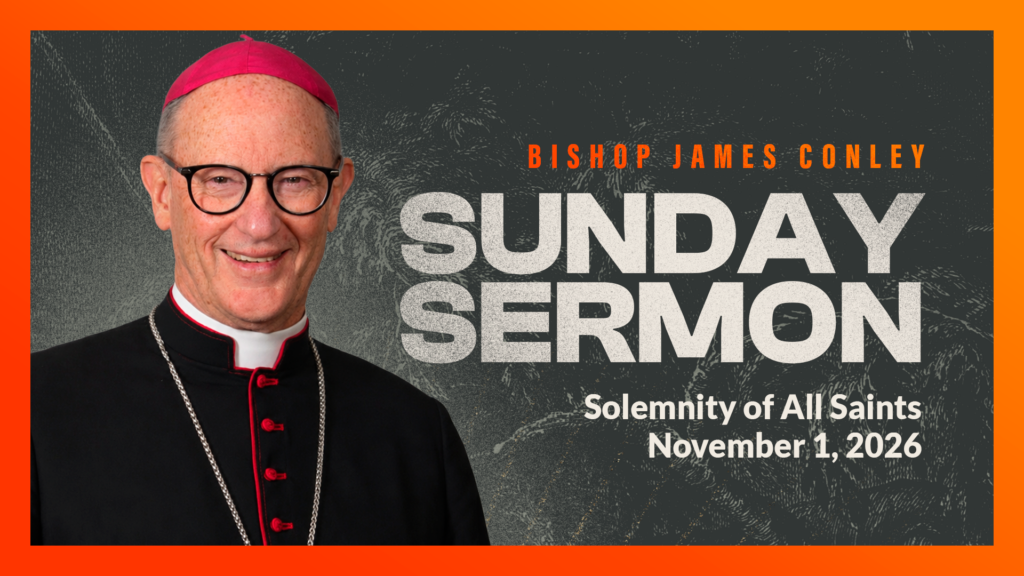
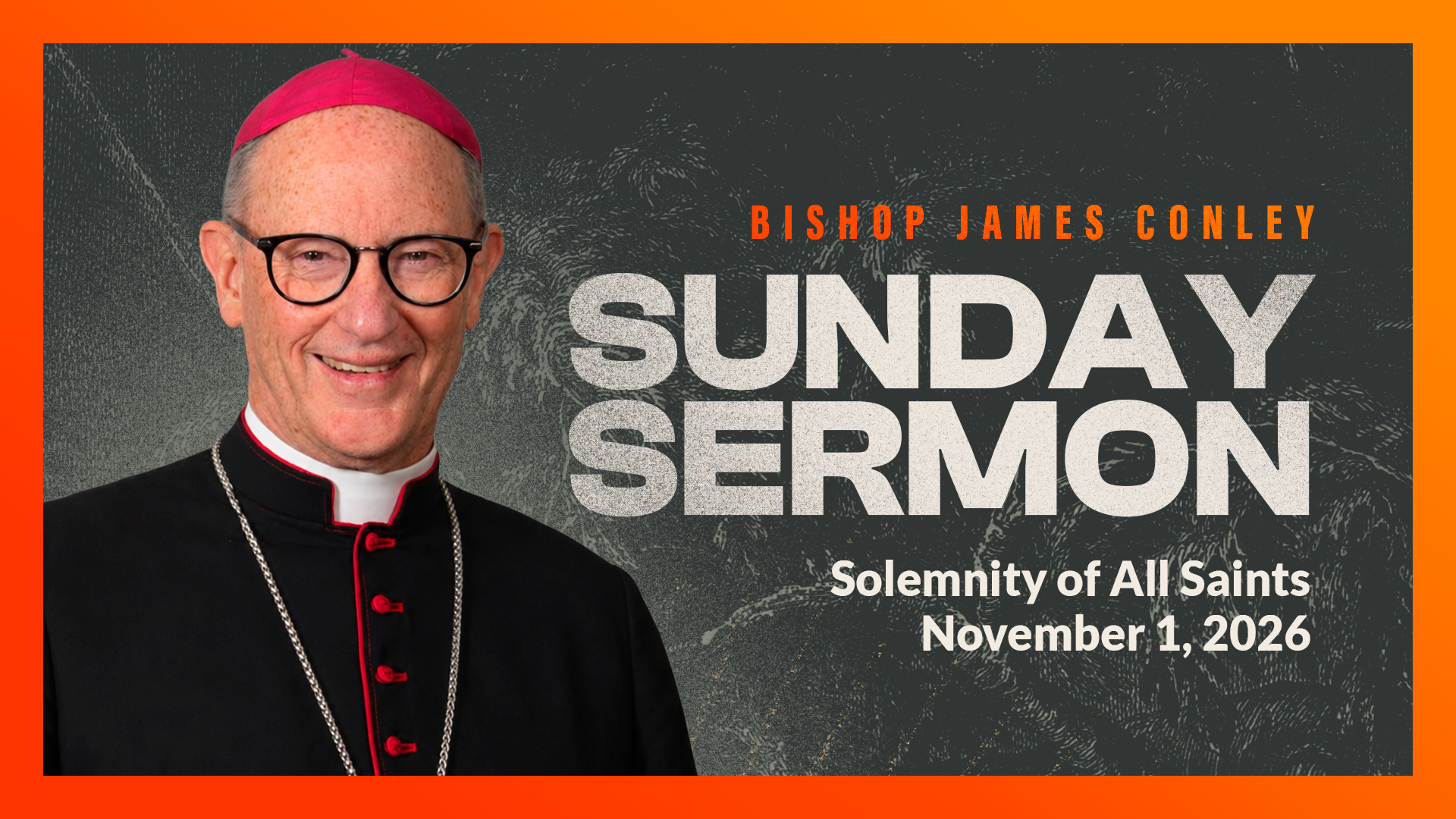
Bishop Conley’s Sunday Homily for Exodus Men
What a day of joy and hope this is, brothers.
It is a day that shines with the power of the Resurrection because it dispels the darkness of death, the greatest source of suffering that has haunted humanity from the Fall of our first parents. Today, we rejoice in victory—the victory of Jesus’s sacrifice in the lives of those who have followed in his footsteps.
The Church calls us to reflect on the unimaginable joy of the saints who now fully partake of the life of the Most Holy Trinity so that we may learn to desire nothing more ardently than to join them. This is the one feast that is meant to be ours as well. We are called to such highness that it is impossible to put it into words.
Most people’s idea of heaven is quite poor. We tend to imagine a place devoid of suffering, where there is nothing but happiness. It sounds great—but there’s so much more! It won’t be like returning to the Garden of Eden. That would be an earthly paradise. What most people imagine when they think of heaven is an earthly happiness. But what the Lord has prepared for us is categorically different.
He could have chosen to give us an earthly fulfillment devoid of suffering, and that itself would have been amazing. Instead, he chose to bring us into his own Trinitarian life such that perfect human happiness becomes less than a shadow in comparison. Think about it: We are not only meant to contemplate the highest, most beautiful, most noble Good—which is God himself—we are meant to become one with him, be transformed into him, and all without losing our humanity and identity. It surpasses our humanity to the point that it requires that we be transformed in order to begin to understand it. In order for an ant to understand Aristotle, it would have to be given a human mind and much more in order to do so. Similarly, we must be deified, in some way transformed into God, in order to partake of his glory.
When put into perspective, it is a promise worth every single penny, sacrifice, and every suffering. As St. Paul says, “I consider that the sufferings of this present time are not worth comparing with the glory that is to be revealed to us” (Romans 8:18-19).
The Beatitudes in today’s Scripture reading have been considered throughout history as a blueprint to get us there. It’s not a checklist of things we must do to earn heaven. They speak of inner transformation. If we pay attention, they describe the heart of Jesus. He became poor for our sake; he is meek, righteous, merciful, and suffered persecution. And what he is by nature—the Son of God—we are called to become by grace—adopted sons of God. We are to be like him.
The Beatitudes tell us if we’re on the right track, if we’re living as sons of God. “Blessed”—makários in Greek—is a hard word to translate. Some scholars prefer “fortunate.” Its Hebrew equivalent even denotes those who are on a pilgrimage, an adventure, and are on the right track. They are fortunate to have found the way and to be walking it. They are fortunate because they’re being transformed into God’s likeness as they walk. They’re partaking of his blessedness already, even if it is still mingled with tears and sufferings, awaiting its fulfillment.
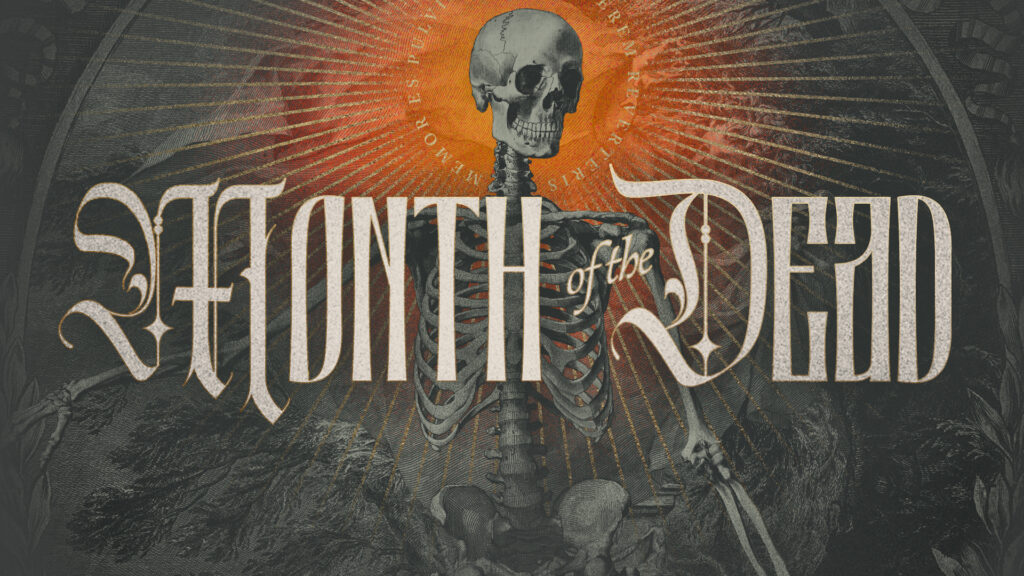
Brothers, you’re fortunate pilgrims. This Month of the Dead, you’re fortunate and blessed to be walking toward the greatest promise, the only promise that ultimately matters. You could be overindulging in the pleasures of this world while ignoring the painful reality of death, as most of the world does. Yet you have chosen to take one hard look at death so that you can smile at it and say with St. Paul and all the saints in heaven, “O death, where is your victory? O death, where is your sting?” (1 Corinthians 15:55). Indeed, death is no threat for he who has set his heart and mind on the Lord, who has walked the way of the Beatitudes. It is a most welcome friend. It becomes “Sister Bodily Death,” as St. Francis called it. It is the pass that makes possible the fulfillment of our greatest desires.
What uncommon and unspeakable freedom comes from setting our hearts and minds on our heavenly treasure, brothers! May the joyful celebration of this great feast inflame our hearts for the desire to partake of the divine life here and now, even as we await its fulfillment alongside the saints and angels in heaven. Walk, dear pilgrim, and rejoice, for the kingdom of heaven is yours. Blessed and fortunate are you in your adventure.
Bishop James D. Conley is the Bishop of Lincoln, Nebraska, and the Spiritual Guide for Exodus 90’s Month of the Dead program starting October 31st.