
A Reading from the Holy Gospel According to Matthew
“Then the kingdom of heaven shall be compared to ten maidens who took their lamps and went to meet the bridegroom. Five of them were foolish, and five were wise. For when the foolish took their lamps, they took no oil with them; but the wise took flasks of oil with their lamps. As the bridegroom was delayed, they all slumbered and slept. But at midnight there was a cry, ‘Behold, the bridegroom! Come out to meet him.’ Then all those maidens rose and trimmed their lamps. And the foolish said to the wise, ‘Give us some of your oil, for our lamps are going out.’ But the wise replied, ‘Perhaps there will not be enough for us and for you; go rather to the dealers and buy for yourselves.’ And while they went to buy, the bridegroom came, and those who were ready went in with him to the marriage feast; and the door was shut. Afterward the other maidens came also, saying, ‘Lord, lord, open to us.’ But he replied, ‘Truly, I say to you, I do not know you.’ Watch therefore, for you know neither the day nor the hour.”
(Matthew 25:1-13)
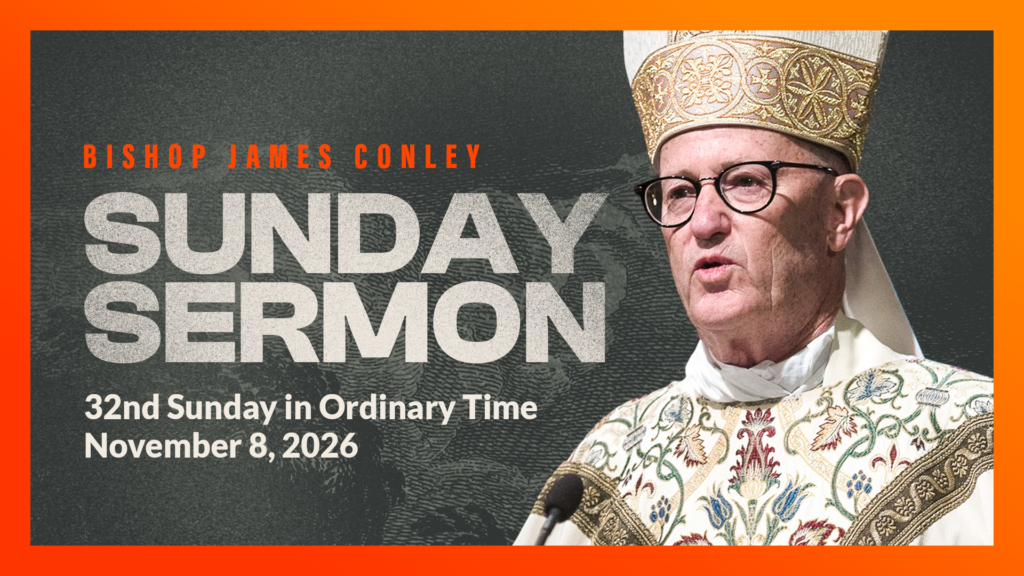
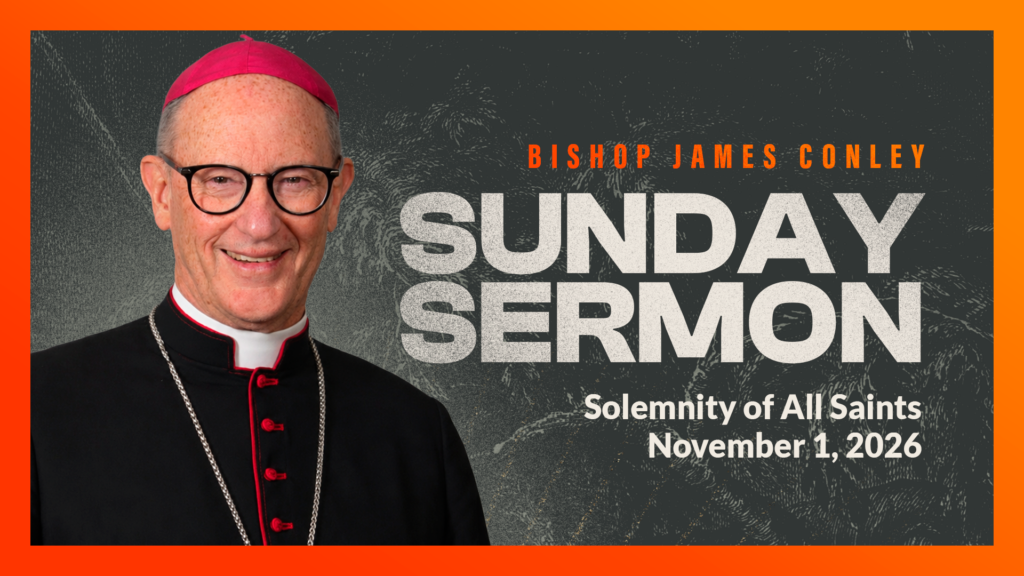
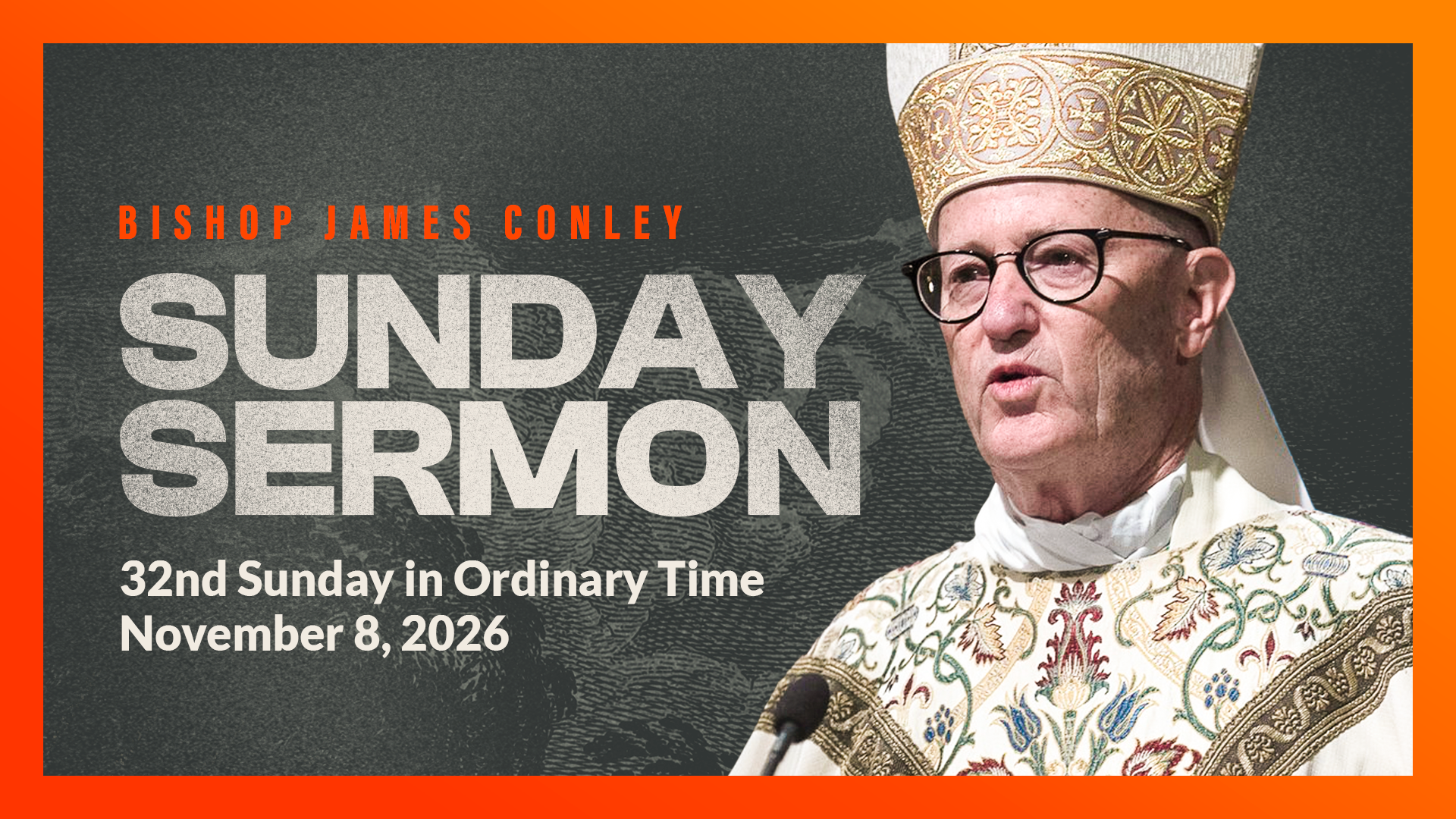
Bishop Conley’s Sunday Homily for Exodus Men
When we turn to the Lord and begin making true changes in life, we often worry about death coming too soon. We know there is much to do, much to change, to purify, to love, to make up for. Yet today’s reading speaks of a different challenge: when the coming of the Lord delays. Will we endure if he takes longer than expected? Will we be on watch when he arrives, as we go about our lives?
Like many of Jesus’s parables, the parable of the ten virgins tells us that a time is set for his coming, but that we know not the time or the hour. His coming refers to the time when he will return in glory at the end of time, but it can also refer to the end of our lives. It is then that we will undergo the particular judgment, when the eternal destiny of our souls will be decided.
What makes this parable unique is that both the wise and the foolish maidens fall asleep. This may seem quite contradictory to the idea of keeping watch. Yet the Lord wants to point us to a different aspect of watchfulness: foresight. What really sets apart the wise maidens from the foolish ones is that the former foresaw the possibility of the bridegroom delaying and prepared for it, while the latter did not. The wedding ceremonies were held at night, and since there was no set time for the arrival of the bridegroom, a delay was a real possibility. Not preparing was foolish negligence. All the maidens must have made provisions to keep their lamps burning.
When the foolish maidens ask the wise ones for some of their oil, the response is appears harsh, but it is understandable: If the wise maidens share their oil, all the lamps may go out, and there will be no one left to receive the bridegroom. Even more, traditionally, the oil has been considered a symbol of good works, which are impossible to pass on to others. The foolish maidens are left scrambling and miss the wedding festival.
There is much we can gather here, brothers. The wise virgins planned well. They took the time to think things through. They had their minds set on such an important event. We can’t say the foolish maidens didn’t care about the arrival of the bridegroom. They also showed up—but they lacked depth. Why didn’t they prepare for a possible delay? Perhaps their minds were constantly occupied with less important things. They even allowed themselves to sleep when they should have been buying more oil. In their distraction, they convinced themselves that they were prepared, but they were not—this they realized at the moment of the bridegroom’s arrival.
What a powerful image and warning for us. The moment of our death—that is when the clock stops ticking. When the time appointed by God has come to an end, there is no going back. We can’t live life in a way that leaves us scrambling at the last minute. Frankly, we don’t even know if we will have time to scramble—death may come too suddenly for us. We pray that this is not the case, that we will have a happy death, having received the sacraments, but we do not know.
Brothers, we must have foresight. We must walk the hard road of thinking and meditating on the hour of our death. This is not only the wise thing to do, but also what leads to the best life we can live here on earth. It may seem dark, but when done right, it leads to a life of peace and joy. Interior peace is very hard to come by nowadays. Yet one of the elements that conduce to it is simply knowing that we are on good terms with the Lord, that if we were to die at this moment in a state of grace and that we have worked hard to follow him, he will welcome us with a merciful embrace—even if we must undergo a final and merciful purification through purgatory. One who has avoided the day of death and its possible consequences cannot live in peace.
The sleep of the wise maidens must have been truly restful—they knew they were prepared. Some of the maidens who were ill-prepared must have had an awfully restless sleep, perhaps coming in and out of it, knowing they should probably be looking for more oil but ignoring the voice of God calling through their conscience. Other foolish maidens perhaps did sleep soundly, almost as well as the wise ones—but not because they were at peace; rather, because they were well accustomed to pushing out important but uncomfortable truths from their minds and forgetting about them.
Many saints have urged us to meditate on the hour of our death. St. Ignatius of Loyola, in his Spiritual Exercises, even encourages us to picture ourselves at the hour of our death before making important decisions and ask ourselves what we would have wished we had decided.
This is the type of view we must acquire in life: one that sees things as they are, in the big picture of our walk and final goal. If we are constantly distracted by the things of this world, if we don’t take time to pray every day and do good works in light of heaven, our vision will be short-sighted. We will only find ourselves surviving day to day, tossed about by the waves of life and our feelings, knowing that there is more and that we should be paying attention to it, but postponing it—and being restless as we try to be at peace.
Let us set our hearts on the way of the wise, brothers. This is the best way to live because it teaches us that heaven begins here on earth through our communion with God, and its fulfillment is opened up to us when the bridegroom arrives.
Let Us Pray
Heavenly Father, you have created us for yourself and given us a lifetime to respond to your invitation of love. Enlighten our mind and strengthen our will, that we may not lose sight of this wonderful invitation. Give us the grace to live in such a way that we may not dread the hour of our death but instead see it as the appointed fulfillment of the very reason we were created. We ask this through Jesus Christ Our Lord. Amen.
In the name of the Father, and of the Son, and of the Holy Spirit. Amen.
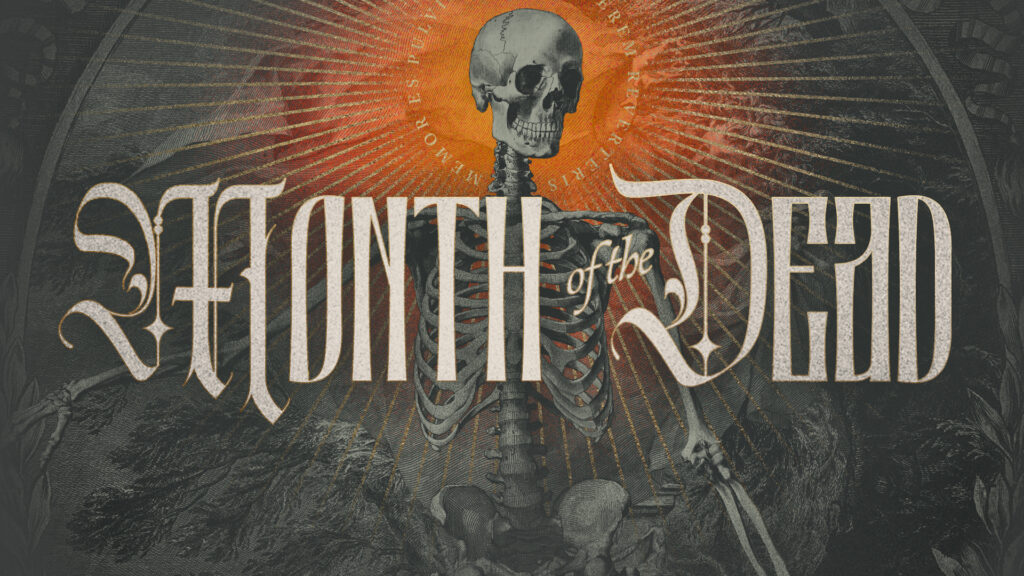
Bishop James D. Conley is the Bishop of Lincoln, Nebraska, and the Spiritual Guide for Exodus 90’s Month of the Dead program started October 31st.