
A Reading from the Holy Gospel According to Matthew
“When the Son of man comes in his glory, and all the angels with him, then he will sit on his glorious throne. Before him will be gathered all the nations, and he will separate them one from another as a shepherd separates the sheep from the goats, and he will place the sheep at his right hand, but the goats at the left. Then the King will say to those at his right hand, ‘Come, O blessed of my Father, inherit the kingdom prepared for you from the foundation of the world; for I was hungry and you gave me food, I was thirsty and you gave me drink, I was a stranger and you welcomed me, I was naked and you clothed me, I was sick and you visited me, I was in prison and you came to me.’ Then the righteous will answer him, ‘Lord, when did we see you hungry and feed you, or thirsty and give you drink? And when did we see you a stranger and welcome you, or naked and clothe you? And when did we see you sick or in prison and visit you?’ And the King will answer them, ‘Truly, I say to you, as you did it to one of the least of these my brethren, you did it to me.’ Then he will say to those at his left hand, ‘Depart from me, you cursed, into the eternal fire prepared for the devil and his angels; for I was hungry and you gave me no food, I was thirsty and you gave me no drink, I was a stranger and you did not welcome me, naked and you did not clothe me, sick and in prison and you did not visit me.’ Then they also will answer, ‘Lord, when did we see you hungry or thirsty or a stranger or naked or sick or in prison, and did not minister to you?’ Then he will answer them, ‘Truly, I say to you, as you did it not to one of the least of these, you did it not to me.’ And they will go away into eternal punishment, but the righteous into eternal life.”
(Matthew 25:31-46)
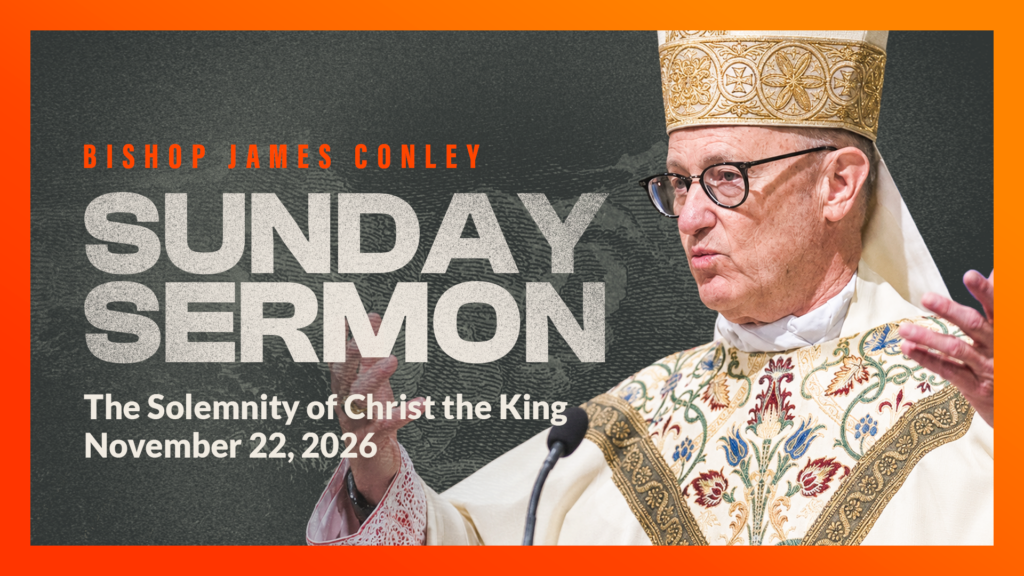
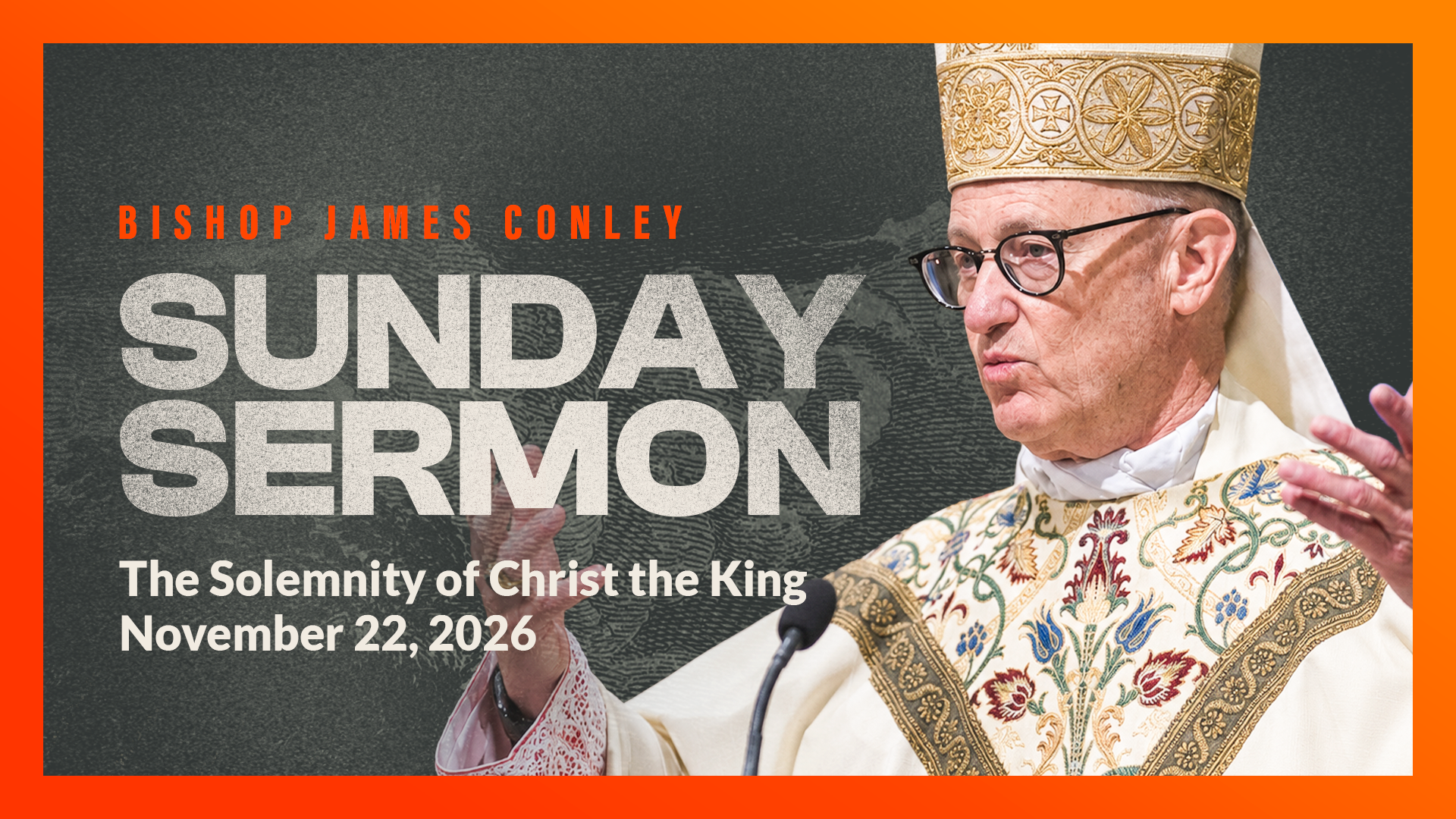
Bishop Conley’s Sunday Homily for Exodus Men
Jesus is a merciful king and teacher. He tells us precisely how things will unfold at the end. He’s almost like a teacher who gives students all the questions and answers on the final exam so they all pass. There will be no surprises. The difference is that knowing the answer will not matter most in this case—doing it will. A merely intellectual faith won’t suffice. The Lord is telling us that the rubber has to meet the road. Faith must be incarnated in us. St. James says, “You believe that God is one; you do well. Even the demons believe—and shudder. Do you want to be shown, you foolish fellow, that faith apart from works is barren?” (James 2:19-20).
Faith in Christ is not simply believing in Christ, but uniting ourselves to him, allowing him to transform us into his likeness and adopting his way of seeing, acting, desiring, and loving. Someone will say, “I’ve done nothing wrong. I have not robbed or killed anyone.” The Lord anticipates this excuse by telling us that there is more to it than simply being good people. True faith is “faith working through love,” as St. Paul says (Galatians 5:6).
The renowned sixteenth-century theologian Luis of Granada said that “on the day of judgment, God will wear the same aspect to us as we have shown in our lifetime to our neighbor.” He was echoing Jesus’s words: “The measure you give will be the measure you get” (Matthew 7:2).
There is a long tradition of identifying the poor and needy in this passage with all people in need, which is certainly valid. Some scholars, however, have pointed out that “the least of these my brethren” Jesus speaks of is very likely a reference to Christians. The phrase recalls the time Jesus said, “Whoever gives to one of these little ones even a cup of cold water because he is a disciple, truly, I say to you, he shall not lose his reward” (Matthew 10:42). It is possible that Jesus had in mind the missionaries, who are often persecuted and suffer greatly for the sake of the kingdom. The seriousness of this negligence on the side of fellow Christians then becomes more palpable: They refused to lend a helping hand to those brothers and sisters who were suffering for his sake.
As Exodus brothers, we find that this interpretation holds deep meaning. Jesus is found in all people in need, but in a very special way, in those brothers who are walking with you. That brother who may be suffering right now for the sake of Christ, who may be struggling in his marriage, his work, or battling an addiction—that brother holds a special place. God has brought you and your fraternity brothers together, even if only for a time, to walk alongside one another on this great journey. We need them, and they need us. We can’t be indifferent to their needs, but are called to make sacrifices for their good out of love for Christ.
I’m sure many of you have great testimonies about how your fraternity brothers have come together to help a brother in an extraordinary way. This is the Gospel in action. This is the way all the brothers in a fraternity are sanctified. Though the one receiving the help will consider himself the most fortunate of all, it is the brothers who have the opportunity to serve Christ in that brother who are the most fortunate—their loving action will not be forgotten on the Last Day. This extends to those closest to us, in accordance with our vocation and responsibilities. Your wife, children, parishioners, religious brothers, friends—are they not Christ in need? Even more, are they not the Christ in need that needs you the most, for which you are most responsible?
Brothers, just as Jesus gave himself entirely for our sake, he wants us to become men for others. He is the king of the universe, and yet he became a servant. He wields his authority not selfishly, but for our own good. He desires that we are generous with our time, that we make sacrifices for the good of our brothers, especially those closest to us.
On this last Sunday of the Month of the Dead and of the liturgical year, let us ask the Lord for the grace to grow in love of him and our neighbor—not only to be ready to respond when we are needed, but also to anticipate each other’s needs. This shows an even greater attention and love. Let us continue growing in freedom, for a free man is a man for others. Our freedom allows us to pour ourselves out in love in imitation of Jesus.
As we thank and rest in his presence today, let us ask him where and how we have been negligent toward those closest to us, so that we may rectify our priorities in light of the Day of Judgment. Let us ask the Lord for the strength and freedom to be men of sacrificial love. This will count for all eternity. And we will hear the Lord tell us, “Come, O blessed of my Father, inherit the kingdom prepared for you from the foundation of the world.”
Let Us Pray
Lord Jesus, all authority has been given to you in heaven and on earth. Help us live out our kingship through self-sacrificial love by serving those in need, especially the people you have placed in our lives. We lift up their sufferings and needs to you. Give us a heart like yours, humble and ready to serve. Strengthen us in your love, that we may not see the Last Day as the Day of Wrath, but instead joyfully join Christians throughout the ages in singing, “Come, Lord Jesus.”
In the name of the Father, and of the Son, and of the Holy Spirit. Amen.