

It could be easy at this point to see the ideal for work that the book of Genesis sets up, to see how Jesus lives that ideal and elevates it in his own life, and then to rush off bright-eyed with enthusiasm only to realize: work is hard.
And it’s true: it is hard.
A healthy dose of realism is helpful at this point, and we find it right there in Genesis 3.
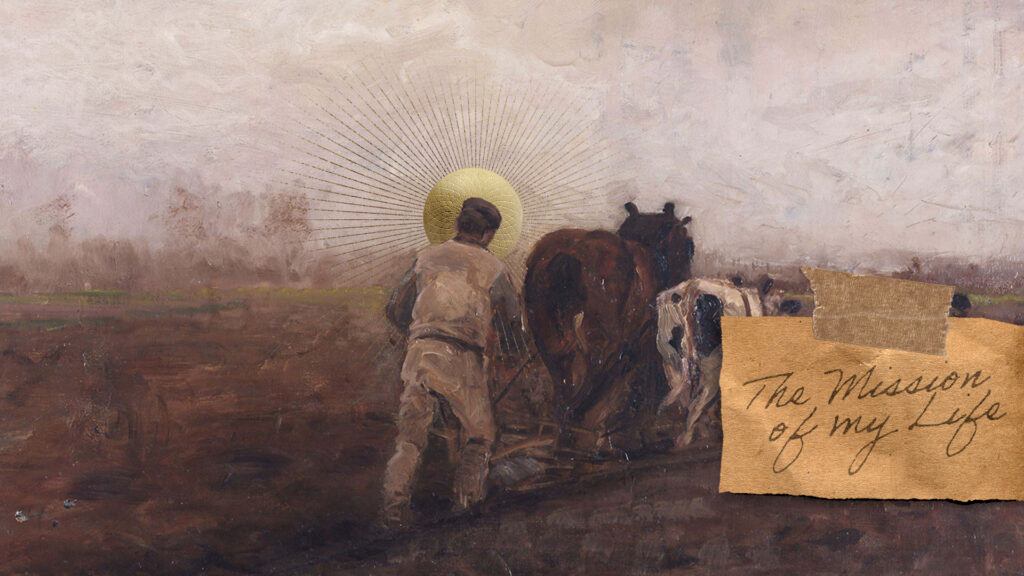
After Adam disobeys God in the garden of Eden, God pronounces his punishment: “Cursed is the ground because of you; in toil you shall eat of it all the days of your life; thorns and thistles it shall bring forth to you…
In the sweat of your face you shall eat bread till you return to the ground, for out of it you were taken” (Genesis 3:17–19).
The picture is far from pleasant, and this reality is the reality we live with after the Fall.
We don’t necessarily have to imagine that prior to the Fall work was easy.
Heavy things were still heavy; the ground still required tilling; and man never is said to have had superhuman strength.
But what seems to have changed after the Fall is not the work itself but man himself.
The interior weakness and lassitude of man makes his work not only difficult but also toilsome or arduous.
It is not so much the difficulty of the labor that is at play, but it is rather the interior reaction to that difficulty and the challenge of rising up, summoning our strength, and overcoming hardship.
In any event, the net result is that work as we know and encounter it is not only difficult, to varying degrees and in various ways, but it is also toilsome, tedious, and monotonous.
Labor has become laborious.
This is the cold, hard truth about work: even if we love the work we do, there will always be moments and parts of it that are downright onerous.
But it’s also a positive truth about the value and role of work in our lives.
The challenge of work becomes an opportunity for overcoming difficulty and for overcoming self.
It’s a challenge that is meant to strengthen and refine us; it is meant to reforge us in the image of God, which we had in the beginning but lost to some degree through original sin.
And if we think about how much time we typically spend at work, well, we have plentiful opportunities for growing in diligence, excellence, and virtue.
So, the realism about work embraces its toil and the opportunity this toil presents for rising up, standing with Christ, relying on him, and imitating him in the workshop at Nazareth.
Sit with the Lord in prayer and meditate on the consequences of the Fall and how you experience them in your work.
Ask the Lord for the grace to see how these consequences are also an expression of God’s mercy, intended to lead us back to him.